


‘The Law does not require a front door to have a soul, My Lords - it requires joint occupation! One brother is not the servant of the other!’
The metallic snick of the collar stud. Fingers pinning the white linen bands—surgical, steady. No tremor. He hauls on the heavy wool gown—the “stuff” of a Junior. He seats the horsehair wig.
He examines himself in the mirror: glinting eyes, composed expression. He shifts the wool mantle on his athlete’s shoulders, checking the collar and the perfect folds of the wool against his suit. He is no longer a cog; he is a mechanism. He knows what he’s worth. He’s been through the Breach of Promise, the Insanity Plea, he’s seen it all. Now is the golden hour. Triumph or nothing.
The pocket watch on the vanity hammers out time like a frenzied smith. The W.H.D. embossed leather brief is waiting for him—his brother’s brief. He disregards it, picking up the M.J.D. embossed one. One last look. He is no longer the younger brother of a solicitor; the Special Pleader takes the stage.
He strikes the Court of Appeal, his movements confident and graceful. Calculated bow to the Judge. The Registrar rises—a dry, rhythmic drone: “Appeal from the Revising Barrister for Christchurch. Druitt v. Gossling. Mr. Druitt for the Appellant; Mr. Druitt the Solicitor instructing.” The Judge raises an eyebrow slightly—something promises an unforgettable performance, he thinks, with two brothers at the case.
He hears his brother poisoning the well, whispering to the clients by his side, “Don’t you worry, my brief is good, he’ll read it aloud.” The clients—The Cloth and the Mantle—nod in approval. The Barrister feels the anger rising, but his self-control is iron. He smiles. Coldly. Courteously.
Is that what you want, he thinks, brother mine? You need to know your place. No. It’s about to get heavy. The stage is set.
Below the bench, Mr. Druitt the Solicitor sits in a stiff frock coat. He notices the brief—not his brief—in his brother’s hand.
“What do you think you’re doing?” he hisses, and his barely audible whisper echoes through the courtroom. “Where is my brief?”
Mr. Druitt the Barrister looks down. His eyes flash a second time—an unnatural, surgical blue. A voice answers, ancient and stripped of human warmth: “Where it belongs... Willie.” The name drops like the lid of a lead coffin. The atmosphere shifts instantly. A biting chill sweeps the court. The Solicitor’s breath becomes visible—a puff of white panic. The Barrister opens his own notes, the thin M.J.D. folder. He has no script. He has no brother.
The Barrister stands. He isn’t reading; he is dissecting. “The Revising Barrister for Christchurch has hallucinated a ‘tenancy’ where there is only a license! He misreads Section Three of the Representation of the People Act 1884 as a gift—it is a statutory gate!” He points a finger at the bench. “The Law does not require a front door to have a soul, My Lords—it requires joint occupation! One brother is not the servant of the other!”
The courtroom is breathless. Mr. Druitt the Solicitor is frozen. Beside him, the two clients—the Barrister and the Reverend—are stupefied. They know their barrister; they have seen him at tea, at the Blackheath Cricket crease, in the family pews. But this man? This man is a stranger wearing his skin. Tom Ellison Gossling stares up, his defense crumbling. The Barrister turns his head. His eyes flash a third time—the cold dominance now absolute.
He delivers the killing blow. Lord Chief Justice Coleridge leans forward, a faint, knowing chuckle escaping. “No objections, Mr. Druitt. Your logic is... inescapable. The Revising Barrister’s decision is thus reversed.”
The Barrister executes a sharp turn on his heels. His wool gown snaps like a whip-crack. He offers a calculated, sharp, perfect bow to the Judge. The wig remains level. As he reaches the doors, he pauses. He turns his head—just a fraction. His eyes meet his brother’s one last time. The Barrister’s eyes are cold, piercing golden-blue, and there’s only determination there, the severance, the triumph. The Solicitor’s are full of fear, contempt, and anger—envy overriding admiration. Brothers no more. No more equality, for the Barrister is always higher than the Solicitor. In Perpetuum.
He walks out. Coleridge’s voice carries through the room: “That one has a bright future ahead of him.”
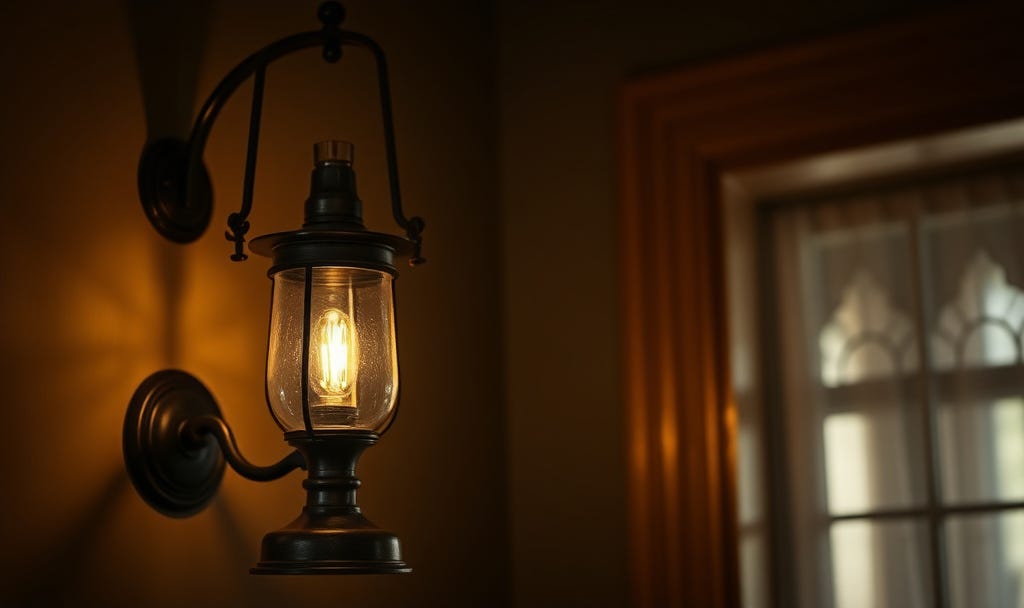
The Robing room. Wool slides down his shoulders and he catches it midway, effortlessly, gracefully, his reflexes sharp. The wig is off. The face in the mirror is still his, but there’s something new to it. The features are sharper, the eyes are cold and burning. He adjusts the collar. Picks up the bag with the robe and the wig, his brief. His hand reaches for the brass key of the gas lamp.
CLICK.
The flame vanishes. Pitch black. The watch is left ticking in the void.
N.B. The “Devil” in this scene is two-fold. First, Monty’s birthday is August, 15 - 15 and 8 correspond to the Devil and the Strength - the card of the sign of Leo - Monty’s sign. His professionalism and charm are exactly what the Devil does to win over the high standing judges. But the real devil hides right behind Monty, and he’s gonna lie and spoil everything even after Monty is gone.
Wooow
Track is perfect
All perfect!!!
Written with a theatrical flair, your honor! 👏