

Eleanor

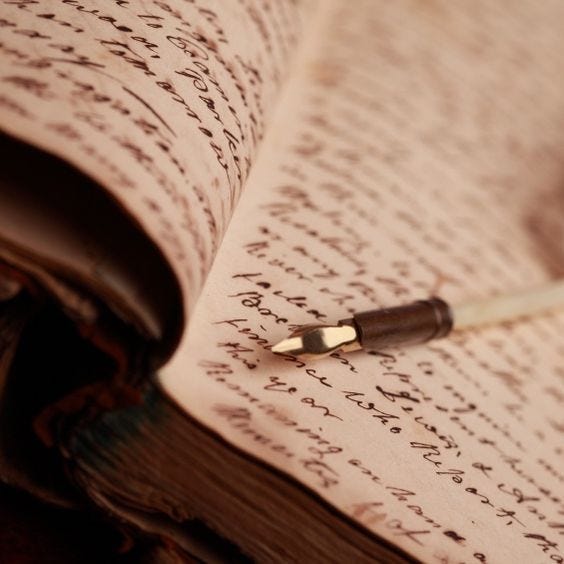
Lady Eleanor Cavendish
October 14th, 1862
The clock in the drawing-room strikes midnight, a cold, rhythmic pulse that mocks the frantic beating within my own breast. I sit here, the ink trembling upon the nib, writing words I dare not breathe even to the shadows.
They speak of "sin" in the hushed, suffocating tones of the Sunday sermon, as if the heart were a ledger to be balanced by a clerk’s hand. But what is this transgression they so fear? It is my life. It is the simple, agonizing fact that I possess a soul that refuses to be stifled by the heavy velvet of my station. They have willed me to be a statue—an ornament to grace Arthur’s table, a silent witness to his interminable, grey existence. He is a man of stone, a bore who occupies his days with the cold mechanics of commerce and his nights with affairs he deems "discreet," while I am expected to rot in the parlor like a gathered lily in a vase of stagnant water.
Is it a sin to wonder? To cast my mind beyond the iron gates of this estate and imagine a life where I am not merely protected, but known?
And then, there is him.
Today, as our hands brushed near the folio, I felt it—the spark, the sudden, terrifying blaze of a kindred spirit. In his eyes, I saw not a "Lady," but a woman. He recognized the fire because he carries the same flame. My head rings with that wretched, romantic phrase—"star-crossed." Doomed. They would have me believe the stars themselves have conspired to keep us apart, but the stars are distant and indifferent. It is the world of men—the lawyers, the priests, the "respectable" gossips—who build the walls and call them "Providence."
They may command my presence at tea; they may demand my signature on their documents; they may even claim my body in the cold sanctity of the marriage bed. But they cannot have my thoughts. They cannot colonize my prayers. If it is a sin to prefer the scorching heat of a true connection to the slow, icy decay of a loveless duty, then I shall embrace my damnation.
I would rather burn for a single hour, illuminated by the recognition of a fellow soul, than spend an eternity flickering out in this drafty, silent tomb. Let them call me fallen. I have never felt more upright.
October 14th, 1862 (Continued)
Lady Eleanor Cavendish
I have laid aside my journal, but the fire in the grate has burned low and still, I cannot find the solace of sleep. My hand, though trembling, feels compelled to commit one further act of defiance. I have drawn a single sheet of my finest vellum—though I fear the very watermark betrays my station—and I shall write to him. I shall send it via Jane, the only maid whose loyalty to me outweighs her fear of Arthur’s wrath.
To the Gentleman who haunts my every waking thought,
I find myself in the deep stillness of the midnight hour, yet my spirit is far from rest. My mind returns, unbidden and relentless, to the moments we shared this afternoon. When our hands met over the folio, the world outside that library—with all its rigid requirements and hollow expectations—simply ceased to be.
I see you still before me: the striking depth of your dark hair against the paleness of a high, noble brow; those eyes, so singularly kind, that seemed to read the chapters of my soul I had long ago resolved to leave unread. You looked at me not as the master of this house looks at his furniture, but with a compassionate expression that suggested you, too, have known the cold weight of a life lived for others.
The memory of your soft-spoken voice lingers in this silent room like a melody. It was the first sound to pierce the grey fog of my existence in many a year. I know what the world would name this—what they would call a woman of my position reaching out across the void to a man who is not her lord. They would call it madness. They would call it ruin.
Yet, I find I no longer fear the ruin of my reputation as much as I fear the continued ruin of my heart. If there is a spark within you that recognizes the fire in me, I implore you: do not let it be extinguished by the damp hand of propriety. Meet me tomorrow at the edge of the willow grove, where the river bends away from the sight of the manor, at the stroke of four.
Whatever the stars may decree, for one hour, let us be simply two human souls who have found one another in the dark.
Yours, in desperate hope,
Eleanor
October 15th, 1862
Lady Eleanor Cavendish
The deed is done. The letter is gone, carried away in the pocket of Jane’s apron, and now I must prepare for a walk that feels more like a pilgrimage to a sacred—or perhaps a pagan—shrine. The house is a labyrinth of watchful eyes and creaking floorboards, each one a potential witness to my "shame."
I have chosen my simplest walking dress of charcoal silk, hoping to blend into the lengthening shadows of the afternoon. My heart hammers against my ribs like a trapped bird, and I find I must pause at the great mirror in the hall to smooth the terror from my face. Arthur is in his study, no doubt buried in ledgers or letters from his "associates" in the city. He did not even look up as I passed the door. To him, I am merely a ghost that haunts his hallways, a fixture of the house that requires no more notice than the grandfather clock.
I slipped through the conservatory, the air heavy and sweet with the scent of forced lilies—flowers blooming in a glass prison, just as I have done. My boots made no sound on the damp moss of the stone path as I skirted the edge of the formal gardens. Every snap of a twig, every rustle of the boxwood hedges, feels like a shout of “Adulteress!” or “Madwoman!”
I avoided the main carriage drive, choosing instead the narrow, overgrown trail that leads through the copse of beech trees. The mud clings to my hem, ruining the silk, but I find I do not care. What is a ruined hem compared to a liberated soul?
I am nearing the willow grove now. I can see the silver sheen of the river through the trailing branches. The wind catches the leaves, and they whisper a warning I refuse to heed. My breath comes in shallow gasps, not from the exertion, but from the terrifying, exhilarating proximity of him. I remember the curve of his high brow, the way his dark hair caught the light in the library, and the sheer, unadultered compassion in his gaze.
If I am caught, I am lost. If he is not there, I am broken. But if he is... if he stands there in the dappled light, waiting for me... then I shall know that the fire I feel is not a solitary madness, but a shared salvation.
I see a silhouette through the weeping branches. It is a man. He stands with his back to me, looking at the water. My hand trembles as I reach out to part the willow fronds.
October 15th, 1862 (Twilight)
Lady Eleanor Cavendish
I parted the willow fronds, the slender leaves brushing against my cheeks like cool, damp fingers. He turned at the sound, and for a heartbeat, the world fell into a terrifying, perfect silence.
There he stood, exactly as my memory had painted him, yet more vivid than any dream. His dark hair was slightly tousled by the river breeze, and beneath that high, noble brow, his eyes searched mine with an intensity that made my knees falter. He did not move at first; he looked at me with such profound compassion, as if he could see every bruise upon my spirit left by Arthur’s cold indifference.
"You came," he whispered. His voice, that soft-spoken melody that had echoed in my mind all night, was even more resonant in the open air.
"I could do naught else," I replied, my own voice a mere shadow of itself. "The house... the life I lead... it felt like a shroud. I had to see if you were real, or if I had simply conjured a kindred spirit out of my own desperation."
He stepped toward me then, closing the distance that society has spent centuries fortifying. He reached out, his hand hovering for a second before he dared to graze my cheek with his thumb. The touch was light, yet it burned more fiercely than any hearth fire.
"You are not alone, Eleanor," he said, and the sound of my name upon his lips felt like a baptism. "I have walked these same halls of silence. I have looked upon the same grey horizon and wondered if the fire I felt within was a gift or a curse. To see it reflected in you... it is the only truth I have known in a lifetime of shadows."
In that moment, under the weeping canopy of the willows, the "sin" they speak of vanished. There was no Arthur, no high society, no rigid Victorian decree. There was only the river, the fading light, and the soul-deep recognition of a man who saw me—truly saw me—for the first time.
October 15th, 1862 (Twilight)
Lady Eleanor Cavendish
The river air was damp, clinging to my charcoal silk like a cold shroud, but the heat of his presence was a defiance against the coming winter. He stood before me, his dark hair disheveled by the wind, looking every bit the kindred spirit I had dreamt of.
He took my hand, his fingers steadying my trembling pulse. There was no artifice in his gaze, only a raw, compassionate recognition that made the breath catch in my throat.
"I have spent a lifetime observing the decorum of the world," he began, his voice a rich, steady baritone. "But the silence between us has become a weight I can no longer bear. I would have you know me not as a stranger passing in the hall, but as a man who sees the fire you are forced to hide."
He drew himself up, his high brow clear and resolute. "Montgomery," he said, the name spoken with a quiet, grounded strength that needed no prefix or hollow title to command respect. "Simply Montgomery. I have walked through my own life as a stranger until the moment I saw you in that library, Eleanor. You are the only soul who has truly spoken to mine."
The name—Montgomery—struck me with the force of a revelation. It felt solid, real, and untainted by the hollow frippery of the circles I am forced to tread. It was a name a woman could lean against.
"Montgomery," I whispered, the name feeling like a sanctuary.
But the world of duty would not grant us a moment longer. The sharp, rhythmic thud of a horse’s gallop erupted from the ridge, accompanied by the frantic, hollow baying of Arthur’s hounds. The hunt was turning toward the water.
"Go," Montgomery urged, his eyes flashing with a protective, fierce light. He pressed a small, leather-bound volume of Elizabeth Barrett Browning’s verse into my palms. "Keep this hidden. It contains the words I cannot speak while the eyes of the world are upon us. I will lead Arthur toward the lower meadows. Run, Eleanor—do not look back. Never look back"
October 15th, 1862 (Night)
Lady Eleanor Cavendish
I reached the servant’s entrance just as the first heavy droplets of a storm began to fall, my lungs searing with the cold evening air. I slipped through the scullery, my charcoal silk hem heavy with river mud and torn by the briars—a map of my transgression etched in fabric. I had just reached the safety of the back stairs when the great front doors groaned open, and Arthur’s voice boomed through the hall, thick with the smell of wet hound and brandy.
I am now locked within the sanctuary of my dressing room, the candle flickering low. With trembling fingers, I have opened the small, leather-bound volume Montgomery pressed into my hands.
It is a collection of Sonnets from the Portuguese, but it is not the printed type that holds my gaze. On the flyleaf, in a dark, decisive hand that mirrors the strength of his brow, he has scribbled a message that makes the breath catch in my throat:
“To E.— They call it a sin to seek the light when one has been bred for the darkness of the tomb. Let them. I would rather be damned with you in the fire than saved in the cold company of those who have forgotten how to feel. You are not a ghost to me. You are the only living thing in this grey world. Until the river bends again. — M.”
Further in, on the page containing the fourteenth sonnet, he has underlined the words: “But love me for love’s sake, that evermore / Thou may’st love on, through love’s eternity.”
The house is silent now, save for the wind rattling the casements. Arthur is likely asleep, or perhaps occupied with his own sordid diversions. He thinks I am his, governed by the laws of men and the titles of the Peerage. He does not know that I have been stolen away by a man with no need for a title—a man named simply Montgomery, who has given me back my soul in the space of a single hour.
I shall hide this book beneath the floorboards, next to my heart. Let the world call it a sin. If this be sinning, then I have finally found my heaven.
October 16th, 1862 (Before Dawn)
Lady Eleanor Cavendish
I have not slept. I have spent the hours of darkness tracing the ink of his words until my fingertips felt as though they might catch flame. I must respond before the household stirs—before the "Angel in the House" must put on her mask of cold, porcelain obedience.
To M.,
Your words reached me through the storm, a beacon more radiant than any candle. I sit in a room filled with the heavy, expensive things my husband has bought to keep me quiet, yet it is your small, worn volume of verse that makes me feel truly possessed of wealth.
You spoke of the darkness of the tomb. For years, I have walked these corridors wondering if I had already passed into it—if the woman I was had been buried beneath the weight of the Cavendish name. But when you look at me with such compassion, the stone is rolled away. I am no longer a ghost; I am a woman who feels the blood rushing through her veins with a terrifying, beautiful violence.
Arthur returned last night, smelling of the hunt and the hollow life he leads. He looked at me and saw nothing—not the mud on my hem, nor the fire in my eyes. He does not know that while he hunts the fox, I have found the sun. He thinks he owns the land, but he cannot claim the river, nor the willow grove, nor the thoughts that now belong entirely to you.
You ask me to love for love’s sake. I tell you now, Montgomery, that I would trade every title, every jewel, and every 'proper' tomorrow for one more hour in the shadow of your high brow, listening to the truth in your voice. I do not fear the fire. I welcome the burn.
I shall be at the weir at dawn on Thursday, when the mist is thickest. Until then, I remain—
Yours, heart and soul,
Eleanor
October, 17th, 1862 (Morning)
Lady Eleanor
The mist was a thick, silver shroud at the weir this morning, swallowing the world until there was nothing left but the roar of the water and the man standing at the edge of the precipice. I ran to him, heedless of the damp or the ruin of my reputation, and threw myself into the sanctuary of his arms.
Montgomery held me as if I were the only solid thing in a dissolving world. He did not speak at first; he simply pressed his face against my hair, his breath warm against the chill of my skin. When he finally pulled back, his compassionate expression was gone, replaced by a fierce, desperate resolve that matched the fire in my own breast.
"Eleanor," he said, his voice a low, urgent vibration. "I cannot leave you here to wither. I have spent these nights haunted by the image of you in that house—a living soul trapped in a museum of dead things. If we stay, the world will eventually find us out and crush us under the weight of its 'decencies.' But there are lands where a name is just a name, and a heart is allowed to beat for whom it chooses."
He took my face in his hands, his high brow furrowed with the gravity of what he was about to propose. "Leave with me. Tonight. There is a carriage that will take us to the coast, and a ship that sails for France before the sun rises tomorrow. We shall have nothing but the clothes on our backs and the truth of what we feel, but we shall be free."
I looked back toward the manor, its grey towers looming like gravestones in the distance. I thought of Arthur’s cold, bored eyes and the suffocating silence of my "proper" life. Then I looked at Montgomery—at the man who had seen my soul and called it back to life.
"I would rather starve in a garret with you," I whispered, "than feast at a table of ghosts. I will go."
We have made our pact. I am to meet him at the old stone bridge when the house falls silent at two bells. I am packing nothing but his book of poems and the small, blood-stained handkerchief I used to bind my wrist. If this be our ruin, then let it be a glorious one. I am no longer a Cavendish; I am a woman who has chosen to burn.
October 19th, 1862 (The Hour of Departure)
Eleanor
The house is a cathedral of shadows, every floorboard a trap, every breath a betrayal. I have stepped beyond the threshold of my dressing room, the small volume of verse tucked into my bodice like a shield. My heart hammers against my ribs, a frantic, rhythmic drum that seems loud enough to rouse the very portraits on the walls.
I reached the gallery outside Arthur’s chambers. The air there always feels thinner, colder, as if his very presence leeches the vitality from the room. I froze as a low, guttural snore broke the silence from behind his heavy oak door. I stood paralyzed, watching the sliver of light beneath his threshold, imagining him waking—imagining those bored, stony eyes finding me in my traveling cloak. I am not a wife to him; I am a piece of entailed property, and he does not take kindly to his assets wandering the night.
I moved past, my feet silent as a phantom’s, descending the grand staircase until the cold marble of the foyer met my touch. I slipped the heavy iron bolt of the side door—the sound of the metal sliding home felt like the final snap of my chains.
But as I reached the rusted iron gates that mark the boundary of the estate, a shadow detached itself from the stone pillar. My scream died in my throat.
It was not Montgomery.
It was Arthur’s valet, Thompson—a man with eyes like a ferret and a soul bought by my husband’s coin. He stood in my path, a lantern swinging low in his hand, casting grotesque, elongated shadows across the gravel.
"Out for a walk, my Lady? At such an ungodly hour?" he whispered, his voice oily with the triumph of a man who has finally caught his prey. "The Master noticed the mud on your silk yesterday. He told me to keep a watchful eye. It seems his 'property' is attempting to elope with the gentleman from the grove."
My blood turned to ice, then boiled into a sudden, incandescent rage. "Step aside, Thompson," I commanded, my voice trembling not with fear, but with the sheer force of my defiance. "You have no power over a soul that has already departed."
He stepped forward, his hand reaching for my arm, but then a silhouette emerged from the mist behind him.
Montgomery.
He moved with the grace of a man who has lived by his own law, his high brow set in a mask of grim determination. He did not waste words. With a swiftness that left me breathless, he intercepted the valet, his hand gripping the man’s throat with enough force to silence his protest.
"Run to the carriage, Eleanor!" Montgomery hissed, his voice a low, fierce command. "I shall deal with this ghost of the old world. Do not look back. Never look back."
I ran. I ran through the gates, leaving behind the titles, the stones, and the man who called himself my master. I reached the waiting carriage, my breath coming in ragged gasps of pure, terrifying freedom. Moments later, the door flung open and Montgomery climbed in, his dark hair wild, his eyes burning with the fire of our shared damnation.
"Is it done?" I whispered as the horses lunged forward.
"It is begun," he replied, taking my hand and crushing it to his chest.
October 19th, 1862 (Morning)
Eleanor
The carriage jolted over the rutted tracks toward Dover, every turn of the wheel a heartbeat further from my living tomb. Beside me, Montgomery remained a silent sentinel, his hand never releasing mine. We reached the docks under a sky the color of bruised iron. The harbor was a chaotic symphony of groaning timber, clanking chains, and the shouts of sailors preparing for the morning tide. The fog was so thick it felt as though we were boarding a ship into the afterlife, leaving the corporeal world behind.
As we stepped onto the salt-slicked deck of the L’Étoile, I felt the sudden, terrifying lightness of a woman who owns nothing but her name and her heart. We stood at the railing, huddled together against the biting spray of the English Channel.
Then, the sun began to break through.
It was not a gentle dawn. It was a violent, crimson gash across the horizon, bleeding gold onto the grey waves. For the first time, I saw Montgomery in the full, unshadowed light of day. His high brow was relaxed, the compassionate expression I first fell for now deepened into a look of profound peace. He looked at me—not as a Lady, not as a Cavendish, but as his equal in this grand, desperate treason.
"Look, Eleanor," he whispered, his voice catching the salt of the wind. "England is fading."
I looked back. The white cliffs were dissolving into the mist, turning into ghosts. Somewhere behind those cliffs, Arthur would be waking to an empty bed and a house that had lost its finest ornament. He would find the mud-stained dress; he would hear the valet’s stammering tale. But he could never reach us here.
"Let it fade," I replied, leaning my head against his shoulder. "I have no country now but the one I find in you."
The ship lurched forward, cutting through the swell toward the coast of France. The wind tore the pins from my hair, letting it stream wild and free for the first time in my adult life. I pulled the small book of poems from my bodice and let the salt air flutter its pages. We were star-crossed no longer; we had fallen from the sky, and in our falling, we had finally learned to fly.
I am Eleanor. Just Eleanor. And for the first time in my existence, I am not rot, but fire.
December 24th, 1862
Eleanor
The bells of Notre-Dame chime through the frost-dusted garret window, a sound so vastly different from the hollow tolling of the manor. Our rooms are small, smelling of cedarwood and the cheap, dark ink Montgomery uses for his translations, but they are warm—oh, they are so very warm. We have no servants, no titles, and our evening meal is often little more than bread and the sharp, bright wine of the district. Yet, I have never felt more like a queen.
I was sitting by the small stove, tracing the lines of my new life, when the post arrived. Among the local circulars sat a heavy, cream-colored envelope that turned my blood to ash. I knew that seal—the Cavendish crest, pressed in wax the color of a dried wound.
I opened it with trembling fingers. There was no greeting.
"To the woman who was once my wife,
The scandal has been managed. The world believes you succumbed to a fever while visiting the coast; a casket filled with stones sits in the family vault. You are dead to England, dead to your name, and dead to me. Do not think your 'kindred spirit' has saved you. You have merely traded a palace for a gutter. When the fire burns out—and it always burns out—do not look back to the hearth you betrayed. There is no mercy left for ghosts.
— Arthur"
I stared at the paper, the words meant to be a final blow, a sentence of eternal exile. I felt a shadow fall over me—the familiar, comforting presence of Montgomery. He read the lines over my shoulder, his high brow darkening for a moment before he gently took the letter from my hand.
Without a word, he crossed to the stove and dropped the expensive, hateful vellum onto the coals. We watched together as the Cavendish name curled, blackened, and vanished into sparks.
"He is right about one thing, Eleanor," Montgomery whispered, pulling me back against the steady heat of his chest. "You are a ghost to that world. But here, in this room, in my arms... you have never been more alive."
He kissed the crown of my head, and the last of my fear dissolved into the winter air. Let the world bury its stones. We have the fire.
January 14th, 1863
Eleanor
The frost on the Seine glinted like scattered diamonds, yet they were jewels I no longer had to beg for. Today, in a quiet stone chapel tucked behind the Place des Vosges, the final vestige of Lady Eleanor Cavendish was laid to rest—not in a casket of stones, but in the warmth of a shared vow.
When the curate asked for his full name, my heart skipped. I had known him as Montgomery, the man who rescued my soul. I had known him as the scholar, the kindred spirit, the rebel. But as he spoke his full name for the legal record, the sheer, ancient weight of it filled the small room, making the Cavendish name seem like a common merchant’s brand in comparison.
"Montgomery Howard, Earl of Effingham," he declared, his voice steady and devoid of the arrogance that usually accompanies such a title.
I nearly gasped. The Howards were the premier family of the English peerage—a lineage that made Arthur’s family look like upstarts of the last century. He had abandoned the seat of his ancestors, the drafty castles and the hollow duties, all to live a life of truth in the shadows of Paris.
As we stepped out into the biting winter air, the curate addressed me as "The Countess of Effingham."
I began to laugh. It started as a low titter and grew into a bright, silver peal that rang against the cobblestones. I laughed until tears pricked my eyes—not for the title, but for the delicious irony of it all. Arthur had prized status above all else; he had treated me like a subordinate because he thought his name was the pinnacle of the world. He had cast me out as a "fallen woman" who had traded a palace for a gutter.
He did not know I had married into the highest blood in the realm.
Montgomery—my Montgomery—pulled me into his arms, his high brow creased with a matching, boyish grin. "Does the name suit you, my love?"
"It is a beautiful name," I replied, catching my breath as I looked into his compassionate eyes. "But I think I shall prefer to be simply Eleanor Howard. Let the world keep the 'Countess' and the 'Lady.' I have the man, and that is the only nobility I require."
We walked back toward our garret, two ghosts of the aristocracy hidden in plain sight, more royal in this new life than Arthur could ever be in his cold, lonely halls.
January 20th, 1863
Eleanor Howard
The fire in our small grate crackles with a cheerful defiance, a sharp contrast to the mournful silence of the house I once haunted. I have done a wicked thing today—wicked, yet entirely necessary for the final cleansing of my spirit.
I sat at our scarred wooden table and drew forth a single sheet of heavy vellum, salvaged from the trunk Montgomery—no, my Montgomery Howard—brought from his own hidden past. Upon the wax, I did not press a common seal. I used the Effingham signet, an emblem of such ancient and formidable power that it would make a man like Arthur tremble before he even broke the seal.
I wrote no long-winded explanations. I offered no pleas for forgiveness. I simply penned a single line in my most elegant, practiced hand:
“The ghost you buried has found a higher throne than the one you offered, and a fire that your cold heart could never kindle. I am no longer a Cavendish, for I have taken a name that has ruled while yours merely served. Do not look for me; you would not recognize the woman I have become in the light of a true sun.”
I did not sign it with my name. The crest was signature enough.
I walked to the Bureau de Poste myself, watching the clerk’s eyes widen as he noted the noble seal. By the time this reaches the grey halls of the Cavendish estate, I shall be sitting in the Luxembourg Gardens, my hand tucked into Montgomery’s, watching the winter light play across the high brow I so adore.
Arthur will know. He will see the Howard crest and realize that the woman he thought he had discarded into the gutter has ascended to a heights he can never reach. He will realize that while he holds a casket of stones, I hold the world.
I have closed my diary now. My story as a victim of "sin" is over. My life as a woman of fire has begun.
January 25th, 1863
Arthur Cavendish, Esq.
The frost has turned the windowpanes into jagged teeth, mirroring the bitter chill that has settled within these walls. I sit in my study, the silence of this house now a physical weight upon my chest. Since the "fever" took her—or rather, since I buried that casket of river stones to save the family honor—the halls have felt increasingly like a mausoleum.
Thompson brought the post this morning on a silver tray. Among the tradesmen’s bills sat an envelope of such exquisite quality it seemed to hum with an ancient, predatory power. I felt a tremor of unease as I recognized the wax: the Effingham crest. The Howards. Why would the premier blood of the English Peerage be writing to a man of my modest standing?
I broke the seal. The single line of script within was like a splash of vitriol across my eyes.
“The ghost you buried has found a higher throne...”
The paper slipped from my nerveless fingers, fluttering to the rug like a dying bird. My heart, usually so disciplined and cold, gave a sickening lurch. It was her hand. Eleanor’s hand. But the poise, the sheer venom of the prose—it was the work of a woman I never knew.
I looked at the crest again—the lion, the cross, the unmistakable mark of the Earls of Effingham.
God in heaven. The "surveyor," the "kindred spirit," the beggar she fled with... he was a Howard? I had treated her as a subordinate, a decorative fixture of my estate, while she was apparently destined for the highest circles of the realm. I had cast her into the "gutter," only for her to land in a palace far grander than any I could ever build.
The irony is a blade in my side. I have spent my life meticulously tending to the Cavendish name, yet she has surpassed me in a single act of betrayal. I am left here with my ledgers, my discreet affairs, and a grave filled with rocks, while she—the woman I called a "sinful ghost"—reigns in the light of a name that dwarfs my own.
I stared into the dying embers of the grate. I am the one who is rotting. I am the one who is truly dead.
June 12th, 1866
Eleanor Howard, Countess of Effingham
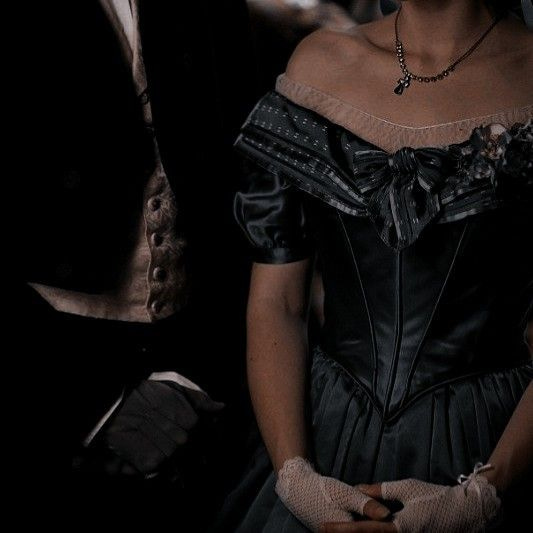
The London season is a dizzying swirl of light and lace, a world I once feared would swallow me whole. But tonight, as I stepped into the gilded ballroom of the Duchess of Sutherland, I felt no fear—only a cool, crystalline amusement. I leaned upon the arm of my Montgomery, now recognized by all as the Earl of Effingham, his high brow inclined toward me with that same compassionate fire that once saved me in the willow grove.
I was draped in a gown of pale blue silk, tiered with elaborate lace—the height of 1866 fashion—and upon my breast sat the Effingham emeralds. I was no longer a ghost; I was a revelation.
And then, I saw him.
Arthur stood by the punch bowl, his face the color of curdled cream. He looked older, his features sharpened by a bitterness that no ledger could balance. As our eyes met across the expanse of the ballroom, the silence that fell between us was louder than the orchestra’s waltz. He stared at the woman he had buried in a casket of stones, now standing before him as the wife of a man whose title and blood dwarfed his own.
Montgomery felt the tension in my arm and turned his gaze toward Arthur. There was no malice in my husband’s expression, only a profound, quiet pity.
"Lord Effingham," Arthur stammered, the words catching in his throat as he was forced by the rigid laws of Victorian etiquette to acknowledge a superior peer. "I... I was under the impression your Countess was... indisposed."
I stepped forward, my smile as sharp as a diamond. "The fever has broken, Arthur," I said, my voice steady and clear enough for the surrounding gossips to hear. "It turns out that life in the light is far more restorative than a tomb of silence."
Arthur’s hand trembled so violently he had to set his glass down. He looked at the emeralds, he looked at Montgomery’s protective stance, and he realized the ultimate truth: he had not only lost his "property," he had been utterly eclipsed by it.
"Come, my love," Montgomery whispered, his soft-spoken baritone pulling me back to the present. "The music is beginning, and I believe I am promised this dance."
As we moved to the center of the floor, I did not look back. I left Arthur to his shadows and his lies. I am Eleanor Howard, and tonight, the stars are not crossed—they are mine.
wow!